
West Yost’s Brett Storey Provides Testimony Before Congress on Forest Management and Watershed Resilience

This article contains and answers the following:
- Brett Storey’s congressional testimony in support of H.R. 184
- The connection between forest health, wildfire resilience, water supply, and infrastructure
- West Yost’s role in helping clients communicate complex natural resources challenges at the national level
- Why was Brett Storey asked to testify before Congress?
- How does active forest management support watershed resilience and wildfire risk reduction?
- What does this testimony say about West Yost’s trusted advisory role with clients?
When Placer County Water Agency (PCWA) needed someone to speak before Congress about the real-world importance of active forest management, they turned to West Yost’s Brett Storey, PE.
On May 21, 2026, Brett provided testimony before the United States House of Representatives Committee on Natural Resources, Subcommittee on Federal Lands, in support of H.R. 184, the “Action Versus No Action Act.” H.R. 184 is a proposed bill introduced by California Congressman Tom McClintock that would streamline the National Environmental Policy Act process for certain forest management projects.
While the request came on short notice, it reflected years of earned trust.
PCWA asked Brett to represent its perspective because of his direct experience planning and implementing collaborative forest management and watershed restoration projects, including the French Meadows Ecological Forest Restoration Project in the Sierra Nevada. The French Meadows project brings together Placer County, Tahoe National Forest, Placer County Water Agency, The Nature Conservancy, Sierra Nevada Conservancy, American River Conservancy, UC Merced’s Sierra Nevada Research Institute, and other partners to improve forest health, reduce wildfire risk, and strengthen watershed resilience. Brett highlighted French Meadows as an example of how collaborative planning can accelerate implementation while maintaining rigorous environmental review. This process helped project partners identify meaningful improvements such as producing lasting benefits for the watershed, surrounding communities, and critical water and hydroelectric infrastructure while being completed in significantly less time and at a lower cost than traditional approaches.

French Meadows, California
For West Yost, this moment reflects the kind of trusted advisory role our team members play every day. Brett’s testimony was not only about technical expertise. It was about helping decision-makers understand the connection between healthy forests, resilient watersheds, public safety, water supply, hydroelectric infrastructure, ecosystems, wildlife habitat, and communities throughout the western United States.
In his testimony, Brett discussed how active forest management can help protect important habitat for species such as the California Spotted Owl and American Goshawk while preserving migration corridors used by elk, deer, and moose. He also noted that reducing wildfire risk around communities can create broader societal benefits, including increased resilience and potentially improved availability and affordability of home insurance in fire-prone areas.
In his testimony, Brett emphasized the urgency of action:
“The question before this Committee is not whether we can afford to act, but whether we can afford the cost of continued inaction.”
That message is especially important across the West, where overgrown forests, severe wildfire risk, and watershed vulnerability continue to place pressure on communities and infrastructure. Active forest management and watershed restoration are essential tools for reducing risk, protecting water resources, and supporting long-term resilience.
Brett also highlighted emerging research that shows the measurable value of proactive forest management. He referenced a recent UC Davis study published in Science that analyzed nearly 300 wildfires across the western United States. The study found that forest fuel treatments, including thinning and prescribed burning, helped prevent an estimated $2.8 billion in wildfire losses. In other words, every dollar invested in these treatments saved about $3.75 in avoided damages.
Brett’s testimony also reflects several of West Yost’s core values in action: delivering high-value solutions that are well communicated, doing what’s right, and taking ownership that earns trust. Being asked by a client to speak before Congress is a meaningful example of the confidence our clients place in West Yost and the credibility our team members bring to complex water and natural resources challenges.
At its core, this work connects directly to West Yost’s purpose: advancing water resources for future generations.
Healthy watersheds do not happen by accident. They require partnership, technical insight, practical solutions, and the willingness to act before the cost of inaction grows too high.
Congratulations to Brett, and thank you to PCWA for the opportunity to support such an important conversation at the national level.
You can view Brett’s entire testimony here: https://www.youtube.com/live/w6Ww33uuXBo?si=k2oa9-gvznt7Ue7t&t=8669
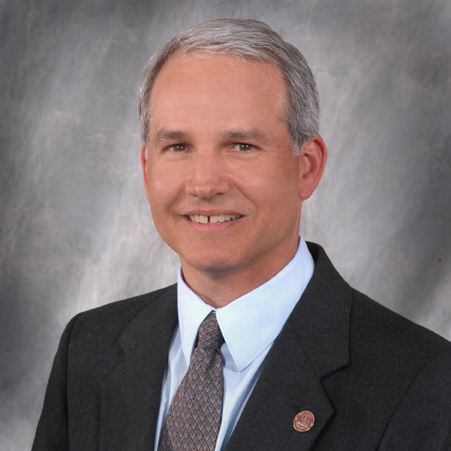
About Brett Storey
Brett Storey, PE, is a Principal Engineer II in West Yost’s Davis office with 42 years of experience in watershed resilience, forest management, groundwater, hydroelectric power, biomass energy, and public policy implementation. A nationally recognized leader in forest protection and biomass-to-energy development, Brett brings deep experience helping public agencies move complex natural resources projects from planning to action. His work includes leading and supporting forest restoration projects in the American River Watershed, serving as Program Manager for the DWR Groundwater Recharge Feasibility Study in the North American Subbasin, and participating on the Program Committee for the Sacramento Groundwater Bank. Before joining West Yost, Brett managed major forestry, biomass, hydroelectric, and water policy initiatives for Placer County, including the multi-partner French Meadows Forest Restoration Project. He also helped establish the West Placer Groundwater Sustainability Agency and served as its first Administrator. Brett is known for building consensus among agencies, elected officials, technical experts, and community partners while developing practical, cost-effective solutions that strengthen watersheds, reduce wildfire risk, and support long-term water resilience across California and western United States for future generations.