
West Yost Newsletter – Winter 2025


As 2025 comes to a close, we’re wrapping up our regional journey in the Bay Area, a place where innovation, collaboration, and resilience come together to shape the future of water. In this final edition of the year, we’re celebrating the people and projects that are strengthening our communities today and preparing them for tomorrow. From planning for sea level rise to advancing sustainable groundwater management, our teams are finding new ways to design for resilience and deliver long-term impact.
Together, we’re securing funding, planning strategically, and turning challenges into opportunities. When we combine technical expertise with a shared commitment to community, we don’t just build projects; we build trust, progress, and a better future for all.
In this issue, you’ll find:
• Sea level rise initiatives: A regulatory and planning update outlining California’s new requirements, regional frameworks, and West Yost’s role in helping coastal and Bay Area communities prepare for increasing flood risks.
• Monterey Project Spotlight: A look at how West Yost’s comprehensive planning study and technical guidance supported the Monterey Peninsula Desalination Project’s major approval milestone and long-term water supply resilience.
• GSA updates: A summary of Sonoma County’s groundwater sustainability progress, including major grant funding wins, new monitoring efforts, and long-term basin management strategies.
• Strategic planning in action: An inside view of how West Yost partners with clients to build alignment, define priorities, and shape actionable, community-centered strategies through collaborative facilitation.
Among this year’s highlights was receiving an PSMJ award for the work featured in Building a Better World, Together (Read Here), a recognition that reflects the dedication and partnership at the heart of everything we do.
Share a highlight from your year!

Abigail Madrone
Vice President & Business Development Director
Winter 2025 Table of Contents:
- Regulatory Update
- Project Spotlight: Monterey
- Project Spotlight: Sonoma
- Industry Insight: Strategic Planning
- Firm Updates
- Team Spotlight
- Closing Message
- West Yost Word


Regulatory Update: Preparing for Sea Level Rise Along California’s Coasts and San Francisco Bay Shorelines
Rising Seas, Rising Risks
California’s coastline is changing as climate change drives sea level rise and intensifies storms. These forces are eroding bluffs, flooding homes and businesses, and damaging roads and critical infrastructure. Nearly 70% of Californians live in coastal counties, and millions more visit each year sustaining a $44 billion coastal economy[1] built on recreation, culture, and connection to nature.
State projections estimate that by 2150, sea levels could rise between 2.6 and 11.9 feet[1], underscoring the urgency of preparing our communities for dramatic coastal change.
San Francisco Bay Shoreline Impacts
The San Francisco Bay shoreline makes up one-third of California’s coast but is expected to bear two-thirds of the state’s total economic losses from sea level rise[2]. With just four feet of rise, the Bay Area could experience widespread flooding of homes, businesses, vulnerable infrastructure, sensitive wetlands and other habitats, particularly impacting low-income and vulnerable communities.
Protecting the shoreline will be costly. A 2023 study estimated that defending the Bay from a worst-case sea level rise and storm surge scenario by 2050 would require at least $110 billion in new flood protections[2]. Yet failing to act would cost far more. Strategic, coordinated, and science-based investments in adaptation are essential to safeguard the region’s shared future.
Policy and Regional Planning
Senate Bill 272, signed into law in 2023, mandates that coastal jurisdictions prepare sea level rise plans by 2034[3]. These plans will be either Local Coastal Programs (for Cities and counties located along the open California coast) or San Francisco Bay Shoreline Resiliency Plans (for local governments along the San Francisco Bay shoreline) and must be approved by the California State Coastal Commission or the Bay Conservation and Development Commission, respectively.
To guide Bay Area efforts, the Regional Shoreline Adaptation Plan (RSAP)[2], released in December 2024, provides a regional coordination framework for Bay Area communities, with guidelines and minimum standards that all Subregional Shoreline Adaptation Plans (SRSAPs) must meet under SB 272.
West Yost’s Role in Coastal Resilience
West Yost is supporting Bay Area communities to assess and plan for flooding risks. The San Francisco Waterfront Coastal Flood Study evaluated 7.5 miles of shoreline to determine strategies for managing tidal and fluvial flooding[4]. The study analyzed costs, benefits, and environmental impacts—including effects on aquatic habitats, wildlife, and local resources. Dr. David Jaffe served as an independent expert reviewer for hydrology, hydraulics, and related engineering elements. West Yost’s Dr. David Jaffe served as an independent expert reviewer for hydrology, hydraulics, and related engineering elements. In the North Bay region, the engineering leadership of Doug Moore and Anne Girtz for the City of Vallejo’s Mare Island project has involved assessing every aspect of Mare Island’s infrastructure, stormwater, sewer, water, and roads, to support smart redevelopment and sea level rise planning. Hawkeye Sheene has supported Bay Area communities in Contra Costa County and the City of Palo Alto in stormwater project planning and funding.
Looking Ahead
Preparing for sea level rise will take ongoing collaboration and long-term investments across California’s coastal and Bay Area communities. Grants can help provide needed funding. The California Ocean Protection Council’s Senate Bill 1 Sea Level Rise Adaptation Planning Grant Program is helping to fund plans and projects that comply with SB 272. California’s Proposition 4 Climate Bond will also fund resiliency efforts in coming years.
West Yost is proud to partner with local agencies and regional leaders to transform plans into practical, science-based solutions. By applying new data and insights from evolving climate conditions, and pursuing strategic grant funding, West Yost is helping build a safer, more resilient future along California’s shores.
Links:
- S. Laird, California Senate Bill 272: Sea Level Rise Planning and Adaptation (California Legislative Information, 2023
- San Francisco Waterfront Coastal Flood Study IEPR Final Report
- Ocean Protection Council Senate Bill 1 Sea Level Rise Adaptation Planning Grant Program
Interested in learning more about Coastal Resilience? Reach out to our team!

David Jaffe
Principal Engineer

Hawkeye Sheene
Senior Funding & Communications Specialist

Project Spotlight: Monterey Desalination
Building resilience throughout the Monterey Peninsula requires foresight, consistent collaboration, and a data-driven understanding of limited resources. In May 2025, West Yost completed the Comprehensive Planning Study (CPS) for California American Water’s Monterey District. This was an ambitious, multi-year effort that aimed to chart a sustainable path for one of California’s most water-constrained regions. The CPS looked ahead to 2040, modeling projected demands and available supplies to help support reliable water service for communities throughout the Monterey Peninsula.
The result was a comprehensive, data-backed roadmap that positions California American Water and the communities they serve to make confident, informed decisions about long-term water security.
This region faces significant supply restrictions due to orders by the State Water Resource Control Board, as well as additional adjudication orders which have reduced allowable extraction volumes from the groundwater basin. To address these challenges, West Yost evaluated the full range of water supply resources, including Aquifer Storage and Recovery, recycled water through Pure Water Monterey, and desalination, to identify opportunities for optimization of a reliable water supply strategy. The result was a comprehensive, data-backed roadmap that positions California American Water and the communities they serve to make confident, informed decisions about long-term water security.

Pictured: Segunda Pump Station
Just months after our study’s completion, the Monterey Peninsula Desalination Project received long-awaited approval of the demand and supply projections. This massive milestone allows the Monterey Peninsula Desalination Project to move forward. Serving as Subject Matter Experts for Ex-Parte meetings with the Advisors to the California Public Utilities Commission (who regulates privately-owned public utilities), West Yost assisted in the validation of this region’s water needs amid complex community and regulatory discussions and ultimately gained approval by the Commission.
By combining this rigorous technical analysis with transparent stakeholder engagement, West Yost’s work on this important project exemplifies how thoughtful planning and collaboration can enhance resilience, not only for the Monterey Peninsula, but for the greater Central Coast region that depends on sustainable water systems for its future.

Brenda Estrada
Engineering Manager

Bobby Vera
Principal Engineer

Project Spotlight: Supporting Groundwater Sustainability in Sonoma County, California
Across California, groundwater has long served as a hidden lifeline, providing drinking water for homes, supporting businesses, sustaining farms and ranches, and providing critical water for ecosystems. Groundwater basins store water underground and are used as a primary water supply or as a backup for use when surface supplies, like rivers, lakes, and reservoirs, run low. Today, local communities that depend on sustainable groundwater basins are working together to protect this vital resource as a cornerstone of long-term water resilience.
Over a decade ago, California took a historic step by enacting the Sustainable Groundwater Management Act (SGMA). This landmark law requires local agencies to form Groundwater Sustainability Agencies (GSAs) and to prepare Groundwater Sustainability Plans (GSPs) for high- and medium-priority basins. These plans set a 20-year roadmap for balancing groundwater use with recharge, avoiding overdraft, and protecting water quality and ecosystems.

Sonoma County’s Groundwater Basins
Sonoma County includes three priority groundwater basins: Petaluma Valley, Santa Rosa Plain, and Sonoma Valley, which together cover roughly 170,000 acres (15% of the county) and serve about 350,000 residents (72% of the population). Within these basins are more than 112,000 parcels; including 9,300 rural residential groundwater users, prime vineyards, dairies, and other agricultural lands, plus extensive municipal and commercial uses. Sonoma County also holds the distinction of having the highest number of wells per capita in California—over 40,000 in total.
Following their formation in 2017, the local GSAs developed GSPs that outline how each basin will achieve groundwater sustainability by 2042. Because the county’s basins and watershed areas are interconnected, coordination among the agencies is essential. Though governed individually, the Sonoma County GSAs have prioritized collaboration to support consistency across the county, align and implement projects, and manage shared resources efficiently.
West Yost’s Role in Sustainability
Since 2018, West Yost has supported the Sonoma County GSAs with administration, operations, fiscal management, public engagement, and grant funding assistance. In 2023, West Yost helped the GSAs secure over $15 million in state grants from the California Department of Water Resources to fund critical GSP implementation projects. Projects include installing 14 new deep and shallow aquifer monitoring wells, studying surface water-groundwater interactions, monitoring for seawater intrusion, and partnering with well owners to track groundwater levels and use. Other efforts include enhancing groundwater recharge, stormwater capture, expanded recycled water use, and promoting water conservation and efficiency programs.
Groundwater basins are an essential strategy to Sonoma County’s climate resilience.
Looking Ahead
Groundwater basins are an essential strategy for Sonoma County’s climate resilience. The collaborative efforts underway will sustainably support people, agriculture, and ecosystems for generations to come. West Yost is proud to continue supporting this vital work to protect and enhance Sonoma County’s groundwater resources.
Learn more about Groundwater Services Here!

Indigo Bannister
Associate Scientist

Industry Insight: Building Resilience Through Strategic Planning – A Collaborative Approach
Strategic planning is more than setting goals; it is about building alignment, defining priorities, and creating a shared vision for the future. At West Yost, our facilitation approach creates an engaging process that ties organizational goals to one of our core values: supporting the communities we serve.
Strategic planning is more than setting goals; it is about building alignment, defining priorities, and creating a shared vision for the future.
Our team recently led a strategic planning initiative for a long-term client. Because we had partnered with them on many projects, we began with a strong understanding of their history, challenges, and aspirations. Rather than relying solely on that experience, we used it to inform our approach while allowing the process to define the outcomes.
We began by conducting interviews and developing a pre-planning report to identify key themes and focus areas. This informed an off-site planning session with leadership and operations teams, where discussions centered on alignment, collaboration, and shared goals. From those conversations, we developed a detailed output report, presented findings to the agency’s Board of Directors, and refined the plan based on feedback before sharing it with the broader community.
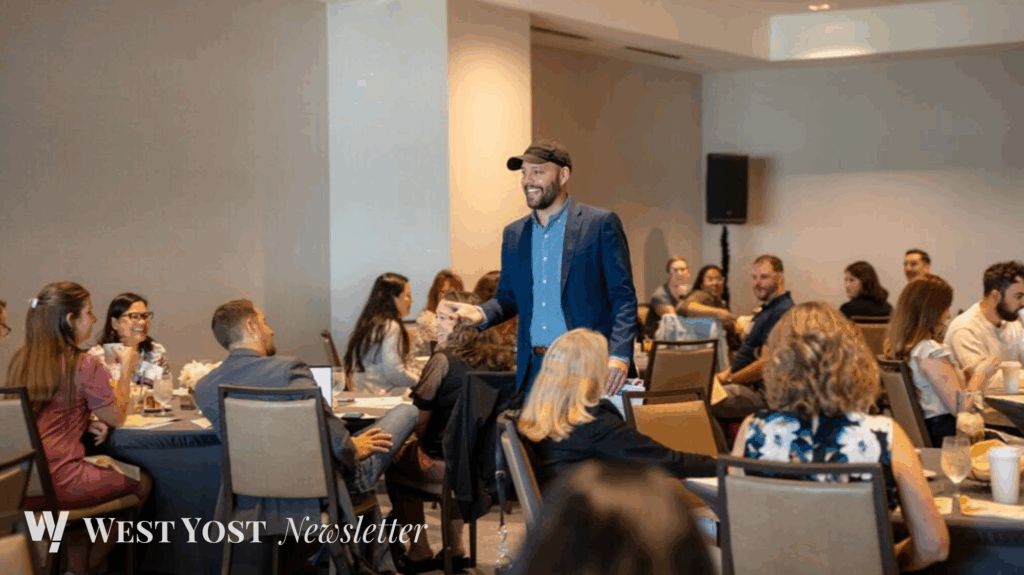
Throughout this process, a common theme emerged: a shared commitment to supporting communities and delivering meaningful, sustainable results. This value provided a foundation of trust and collaboration that strengthened both the planning process and the partnership between our teams.
The experience also deepened our understanding of the challenges municipalities face today and highlighted how West Yost’s multidisciplinary strengths in facilitation, communications, and data visualization can drive thoughtful, actionable results.
Looking to update your strategic plan? Reach out to David Garrison to see how we can help.

David Garrison
Outreach & Communications Lead
Wins & Successes: Welcoming Andy Bochman – Strengthening Resilience at West Yost
West Yost is pleased to welcome Andrew (Andy) Bochman as our new Resilience Strategic Lead, further strengthening our commitment to future-ready infrastructure solutions. Andy brings more than two decades of national leadership experience at the intersection of infrastructure resilience, climate adaptation, cyber-informed engineering, and emerging technologies such as artificial intelligence.

Prior to joining West Yost, Andy served as a Senior Grid Strategist at Idaho National Laboratory, where he helped advance system resilience and risk reduction strategies at a national scale. He is also the co-author of Countering Cyber Sabotage and a recognized thought leader on designing infrastructure that can withstand evolving digital and physical threats.
In his new role, Andy will collaborate across all West Yost sectors to help clients address today’s complex challenges with integrated, forward-looking solutions that connect technology, climate, and community resilience.
Read more about Andy’s perspective in our upcoming West Yost Word feature.

Team Member Spotlight: Kathryn Gies
For 25 years, Kathryn Gies has dedicated her career to improving wastewater treatment systems and protecting public health across California. As a leader in the Bay Area, she has applied her deep technical expertise to some of West Yost’s most impactful projects, helping communities develop innovative and sustainable solutions to complex water challenges.

Kathryn’s work focuses on optimizing treatment processes and supporting facilities as they adapt to changing regulations, new technologies, and growing community needs. She is also a longtime member and current president of the California Water Environment Association (CWEA), where she continues to mentor others and advocate for the advancement of the profession.
Kathryn truly embodies West Yost’s value of taking pride in what we do. Her dedication, leadership, technical acumen, and collaborative spirit strengthen not only our projects but also the communities we serve every day.

Say Hi to Kathryn at the 2026 Annual Conference in April.
You can register – HERE!
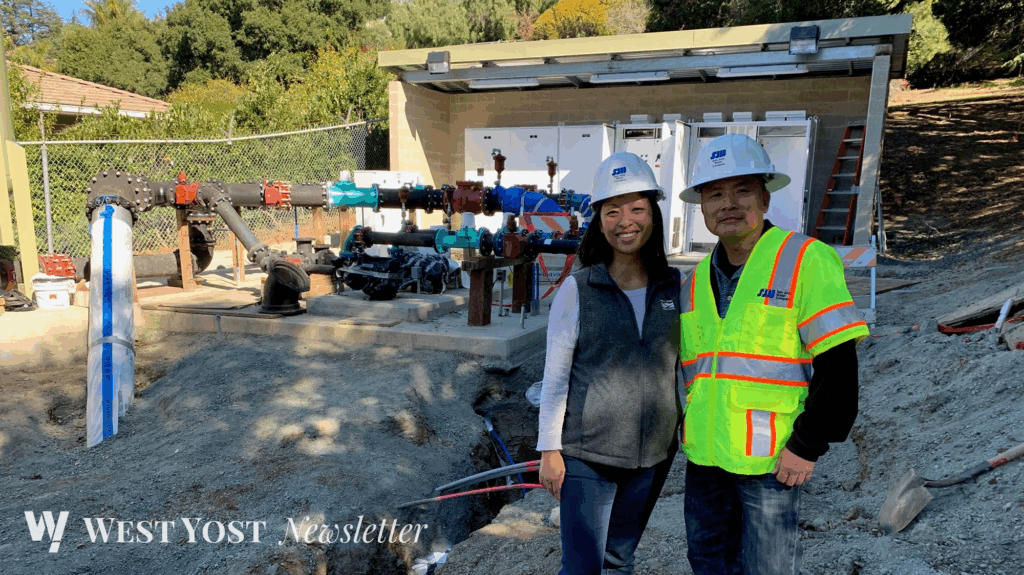
Closing Message: From Amy Kwong
Looking back after 19 years with West Yost, I’m grateful to see how much our Bay Area team has grown, not only in size but also in capability, innovation, and connection. It’s been inspiring to see how far we’ve come together, evolving from a small local group into a team that now plays a major role in shaping resilient water systems across the region.
What stands out most to me are the people who make up this team. I’m inspired by my teammates, who bring passion and care to every project. Whether we’re tackling complex modeling challenges or brainstorming new ways to support our clients, there is a genuine sense of pride and collaboration that makes this work so rewarding.
As we look ahead, I’m excited for what’s to come. The challenges ahead, from climate adaptation to sustainable infrastructure, will call for innovative thinking and teamwork, and I know West Yost is ready. Together, we’ll continue strengthening our communities, supporting one another, and building a future we can all be proud of.

Amy Kwong
Engineering Manager
The West Yost Word

West Yost Word is a series of articles we share on our website that are written by our team members or the firm, spotlighting important innovations, industry updates, or firm celebrations.

West Yost Word: Building a Better World, Together
By Abigail Madrone, Business Development Director, Vice President
West Yost’s recognition with the PSMJ Building a Better World Award celebrates our 35-year legacy of community service, sustainability, and purpose-driven water solutions.

Leveraging Asset Management for Cybersecurity in the Water Sector
By Jeremy Smith, PE, Cybersecurity expert at West Yost
In many utilities, asset management and cybersecurity are led by different teams — one focused on maintaining and planning for large physical assets, the other protecting virtual systems and responding to real-time threats.

Why Cybersecurity is Infrastructure Resilience
By Joel Cox, GICSP, GPEN, GRID, CCNA, Cybersecurity expert at West Yost
Water utilities have long been at the center of community health, safety, and economic vitality. As critical infrastructure providers, utilities manage systems that the public rarely sees but always relies on.

We hope you enjoyed this edition of our quarterly newsletter.
Be sure to check out our Fall 2025 edition – HERE!